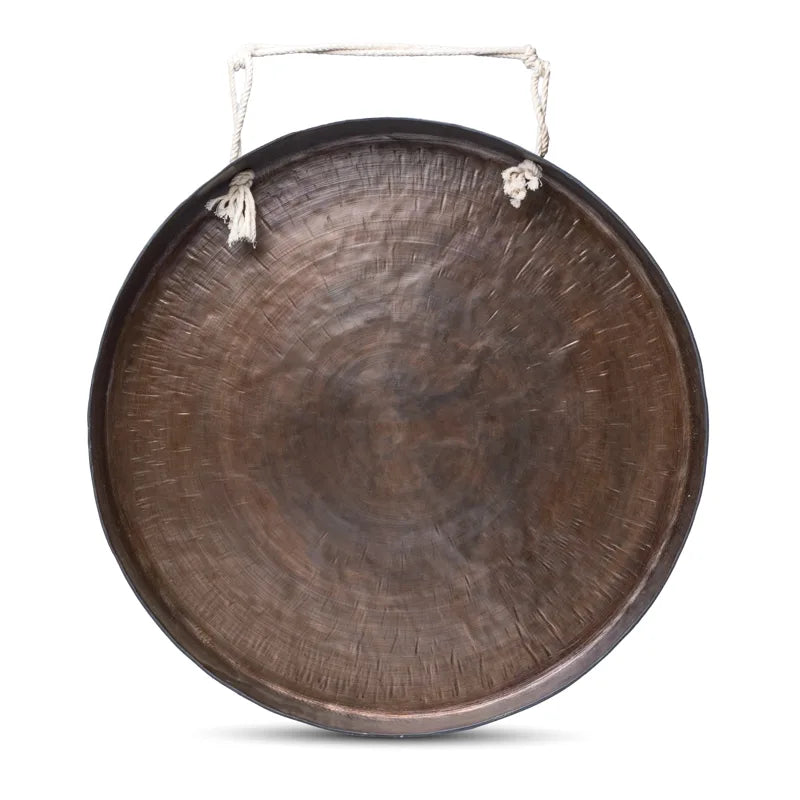
Nepalese gong Buddha Shakyamuni engraved -- 60cm; 9,5kg
Nepalese gong Buddha Shakyamuni engraved -- 60cm; 9,5kg
SKU:17341
View full detailsDescription
Ornately carved Nepalese gong with deep, upturned rim. The sound is rich, with little 'crash' and a long sustain. Near the rim, the tone is considerably lighter, making this visually highly attractive gong pleasantly accessible to play.
The engraving on this gong depicts Buddha Shakyamuni amidst the five Dhyani Buddhas. The gong is richly decorated with traditional auspicious symbols, such as the knot of infinity and the dorje.
Nepali gong
The Nepali gong (Chinese: "tam-tam") is a traditional percussion instrument originating in East Asia. This impressive gong has a flat striking surface and produces a low fundamental tone, followed by a burst of sound with many overtones. With this grand, resonant sound, the Nepalese gong is a favourite in both concert halls and meditative spaces.
Materials
The gong is traditionally manufactured from a high-quality bronze alloy consisting of copper and tin. This material is expertly forged to create a full sound
Playing accessories
To play the Nepali gong, one typically uses a mallet or beater, which is lined with felt or leather. The choice of tool affects the quality of the sound. For instance, softer mallets produce a deep and droning sound, while harder mallets provide a clear and penetrating sound. The Nepalese gong produces a wide range of sounds, depending on the percussion instruments used:
Soft mallet: Creates a deep, resonant and mysterious sound that slowly builds and expands in space.
Hard mallet: Delivers a sharp, clear and fast-rising sound that cuts through space and fades quickly.
Rubber beater: Produces a compact, defined sound with fewer overtones, ideal for specific musical accents.
Each of these playing implements allows the musician to adapt the emotive and acoustic impact of the gong to the specific needs of the performance or setting.
Specifications
- Article
- 17341
- Weight
- 12.24 kg
- Country of origin
- NP
Documents
GPSR Document